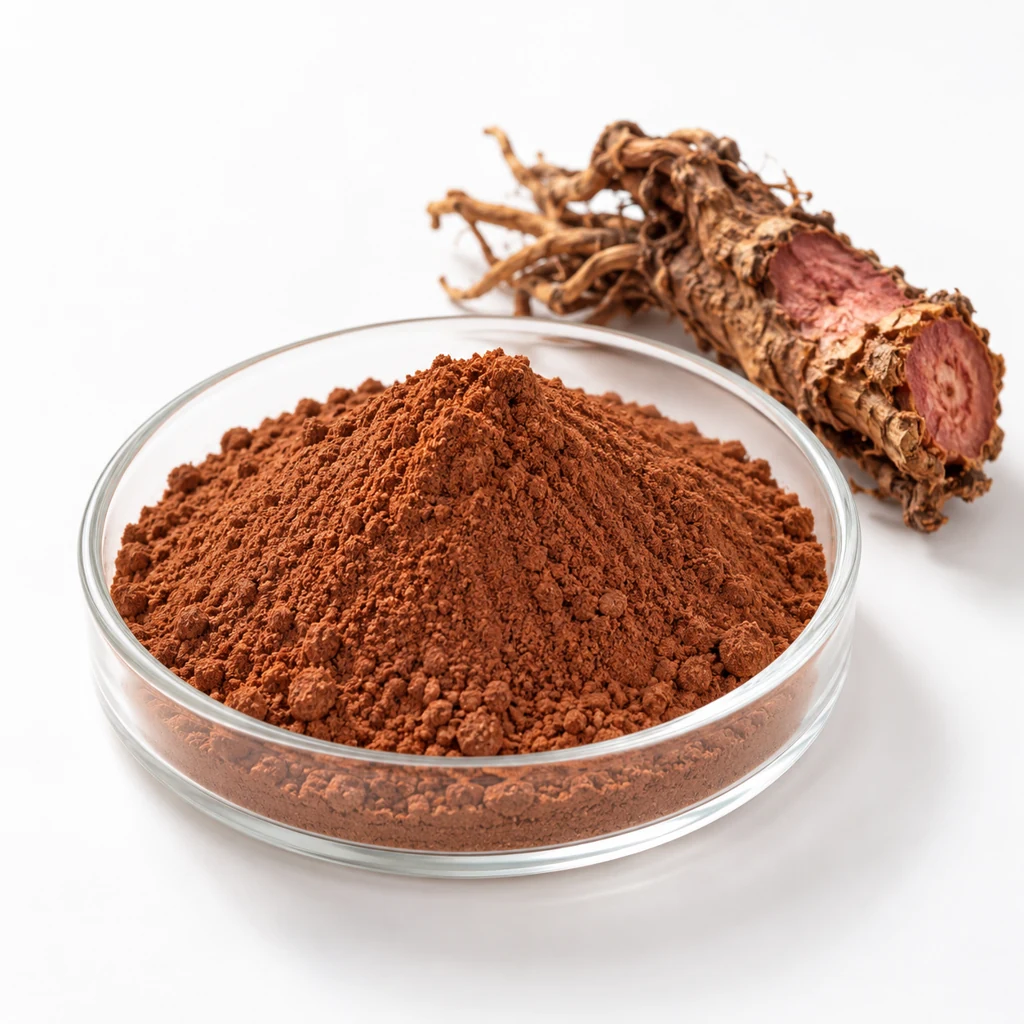
Description
STANDARDISED BOTANICAL EXTRACT
Rhodiola rosea L. Root Extract — 2.0%
The 2.0% Rhodiola rosea root extract is listed between the 1.0% and 3% grades. Confirm the named marker, HPLC method and batch result before comparing the stated percentages or changing an inclusion rate.
COA-Backed Specification
| Identity | Rhodiola rosea L. |
|---|---|
| Plant part | Root |
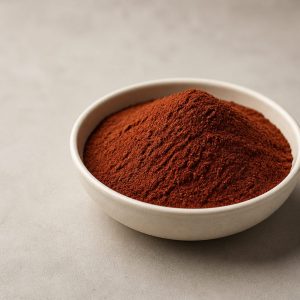
| Form and colour | Fine reddish-brown powder |
| Assay | Standardised assay 2.0% by HPLC |
| Method | HPLC |
| Marker | Named on the batch COA; salidroside or total rosavins depending on the lot |
| Particle size | 98% through 80 mesh |
| Loss on drying | Within the limits of the approved specification |
| Ash | Within the limits of the approved specification |
| Heavy metals | Within the limits of the approved specification |
| Microbiological limits | Within the limits of the approved specification |
| Shelf life | Two years when stored properly |
Limits shown are the agreed specification. Result values are issued on the batch-specific certificate of analysis.
Buyer Decision Guide
Choosing between 1.0%, 2.0% and 3% is an arithmetic decision once the marker is fixed. Three points make the comparison clean.
- Assay: 2.0% standardised by HPLC, marker named on the COA.
- Marker basis stated so the three grades can be compared on the same footing.
- Identity confirmed as Rhodiola rosea root.
- Calculated inclusion rate supplied on request for each grade.
- Loss on drying, ash, heavy metals and microbiology reported per batch.
- COA, specification sheet and safety data sheet accompany each shipment.
How This Grade Differs
The 1.0% and 3% grades are listed separately. Compare the named marker, HPLC method, batch result and required inclusion rate before treating these grades as substitutes; the stated percentage alone does not establish equivalence.
Compare listed grades: 1% grade 3% grade. Confirm the marker basis on the current batch COA.
Quality and Documentation
Each lot is assayed by HPLC with the marker and calculation basis recorded, then checked for moisture, ash, heavy metals and microbiology.
Frequently Asked Questions
What specification defines Rhodiola Rosea Extract Powder 2%?
Standardised assay 2.0% by HPLC, tested by HPLC.
How is this grade positioned against the other forms offered?
The 1.0% and 3% grades are listed separately. Compare the named marker, HPLC method, batch result and required inclusion rate before treating these grades as substitutes; the stated percentage alone does not establish equivalence.
What must the certificate of analysis report for this product?
Assay: 2.0% standardised by HPLC, marker named on the COA. Marker basis stated so the three grades can be compared on the same footing. Identity confirmed as Rhodiola rosea root.
What should a buyer confirm before the first order?
Choosing between 1.0%, 2.0% and 3% is an arithmetic decision once the marker is fixed. Three points make the comparison clean.
Are you a manufacturer or a trading company?
LongBio is Shaanxi Longsheng Biotechnology Co., Ltd., a direct manufacturer of botanical extracts and functional ingredients integrating R&D, production and export support. Factory review can be arranged by video or an on-site visit.
Can I request the current batch COA before ordering?
Yes. Request the applicable current or representative COA and compare product identity, method, limits and results before approving a purchase order.
What is the minimum order quantity?
The regular MOQ is typically 1 kg. An evaluation sample of 10-20 g can usually be arranged before a formal order, subject to stock.
Do you support custom specifications or packing?
Alternative assay targets, particle size, packing and private-label requirements can be reviewed case by case, subject to production feasibility and a revised written specification.
Request COA, Sample or Quotation
Send your target specification, application, order quantity, destination country and required test limits.
Get the current batch COA, a sample or a quotation