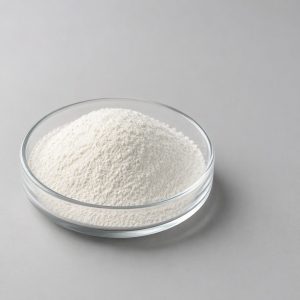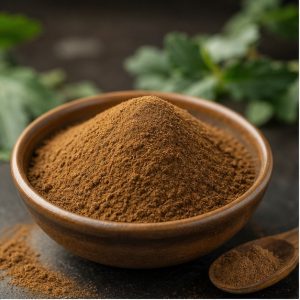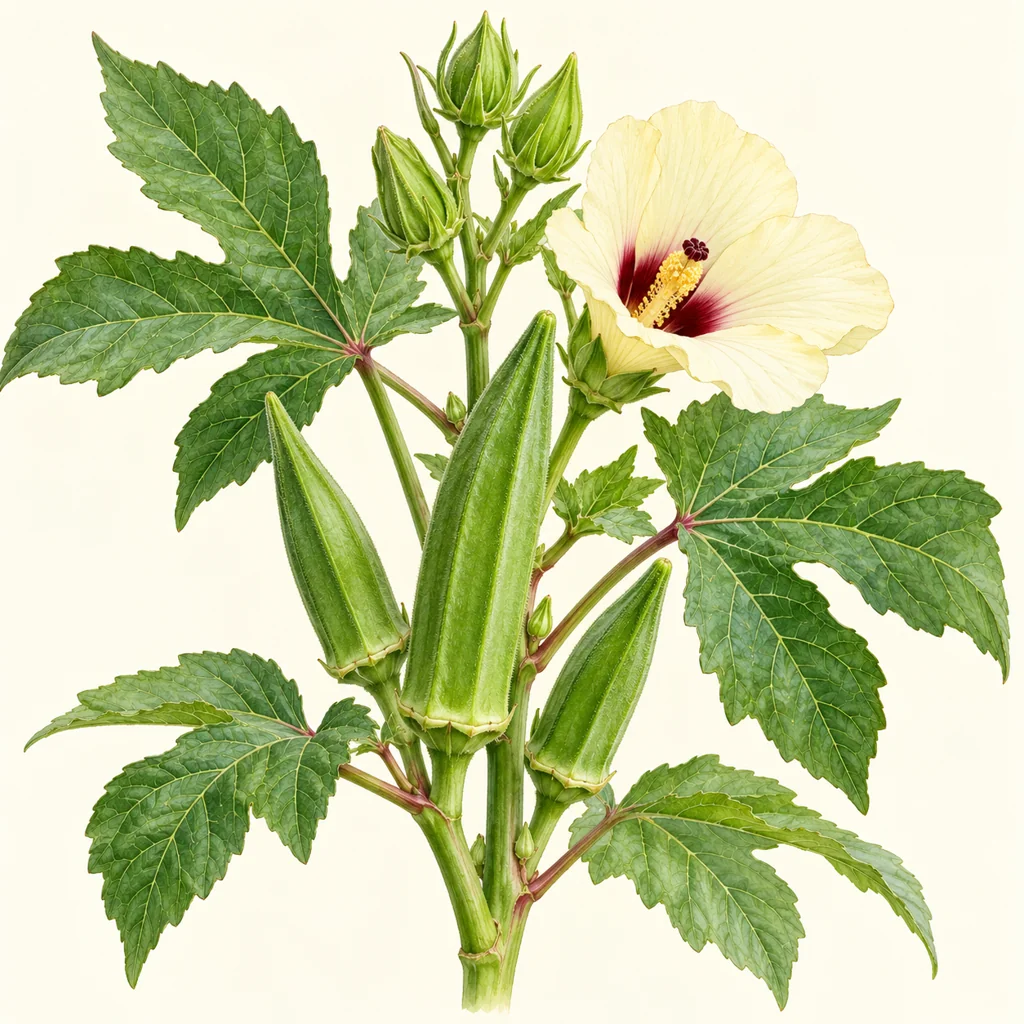
Description
STANDARDISED BOTANICAL EXTRACT
Abelmoschus esculentus Fruit Extract — 10:1
Okra extract is produced from the young pods of Abelmoschus esculentus and concentrated to a 10:1 plant-to-extract ratio. It is bought mainly by formulators working on soluble fibre, mucilage and polysaccharide blends, where the pod mucilage is the fraction of interest.
COA-Backed Specification
| Identity | Abelmoschus esculentus (L.) Moench |
|---|---|
| Plant part | Fruit (young pod) |
| Form and colour | Light yellow to yellowish-brown powder |
| Assay | 10:1 extract ratio |
| Method | TLC |
| Particle size | 98% through 80 mesh |
| Loss on drying | Within the limits of the approved specification |
| Ash | Within the limits of the approved specification |
| Heavy metals | Within the limits of the approved specification |
| Microbiological limits | Within the limits of the approved specification |
| Shelf life | Two years when stored properly |
Limits shown are the agreed specification. Result values are issued on the batch-specific certificate of analysis.
Buyer Decision Guide
A 10:1 product is defined by its input-to-output ratio, not by a marker compound, so the quotation has to state the raw herb grade and the extraction solvent before the ratio means anything.
- Ratio: 10 kg of dried young pod yields 1 kg of extract; the input herb grade is stated on the quotation.
- Extraction solvent: water. Confirm it before ordering if your process is ethanol-based.
- Marker: none standardised. Identity is confirmed by TLC against a retained reference.
- Mucilage: the water-soluble polysaccharide fraction is the reason most buyers choose this grade.
- Carrier: none added. If you need a free-flowing 10:1 for blending, say so at enquiry.
- Flowability: 10:1 okra extract is hygroscopic; specify the packing if humidity is high at your plant.
How This Grade Differs
The site does not currently list a conventional okra extract, so this page stands alone rather than as a grade variant. Buyers comparing it with okra whole powder should note that the powder is the milled pod and the extract is the concentrated soluble fraction.
Quality and Documentation
Released on a batch certificate covering identity by TLC, ratio declaration, moisture, ash, heavy metals and microbiological limits.
Frequently Asked Questions
How is appearance checked?
Light yellow to yellowish-brown powder, compared against a retained sample from the approved batch.
Which safety parameters are tested every lot?
Moisture per specification, ash per specification, heavy metals and microbiology against the approved specification.
How long can we hold stock before use?
Two years from the manufacture date when the pack stays sealed and dry.
How recent is the representative batch shown?
The batch referenced is issued per lot; your shipment is released on its own certificate rather than the representative one.
Which marker is the percentage based on?
The declared figure is 10:1 extract ratio, measured by TLC; the marker basis is recorded on the batch certificate.
What is the minimum order quantity?
The regular MOQ is typically 1 kg. An evaluation sample of 10-20 g can usually be arranged before a formal order, subject to stock.
Can I review the COA before I pay?
Yes. Request the current or representative COA and check identity, method, limits and results before approving the purchase order.
What packing options are available?
Standard packing is a sealed food-grade inner liner inside an export carton or fibre drum. Pack size, labelling and private-label artwork are agreed in the written specification.
Request COA, Sample or Quotation
Send your target specification, application, order quantity, destination country and required test limits.
Get the current batch COA, a sample or a quotation