BOTANICAL INGREDIENT BUYER GUIDE
How to Compare Botanical Extract Specifications
A purchasing framework for comparing raw powders, ratio extracts and standardised extracts without treating unlike grades as equivalents.
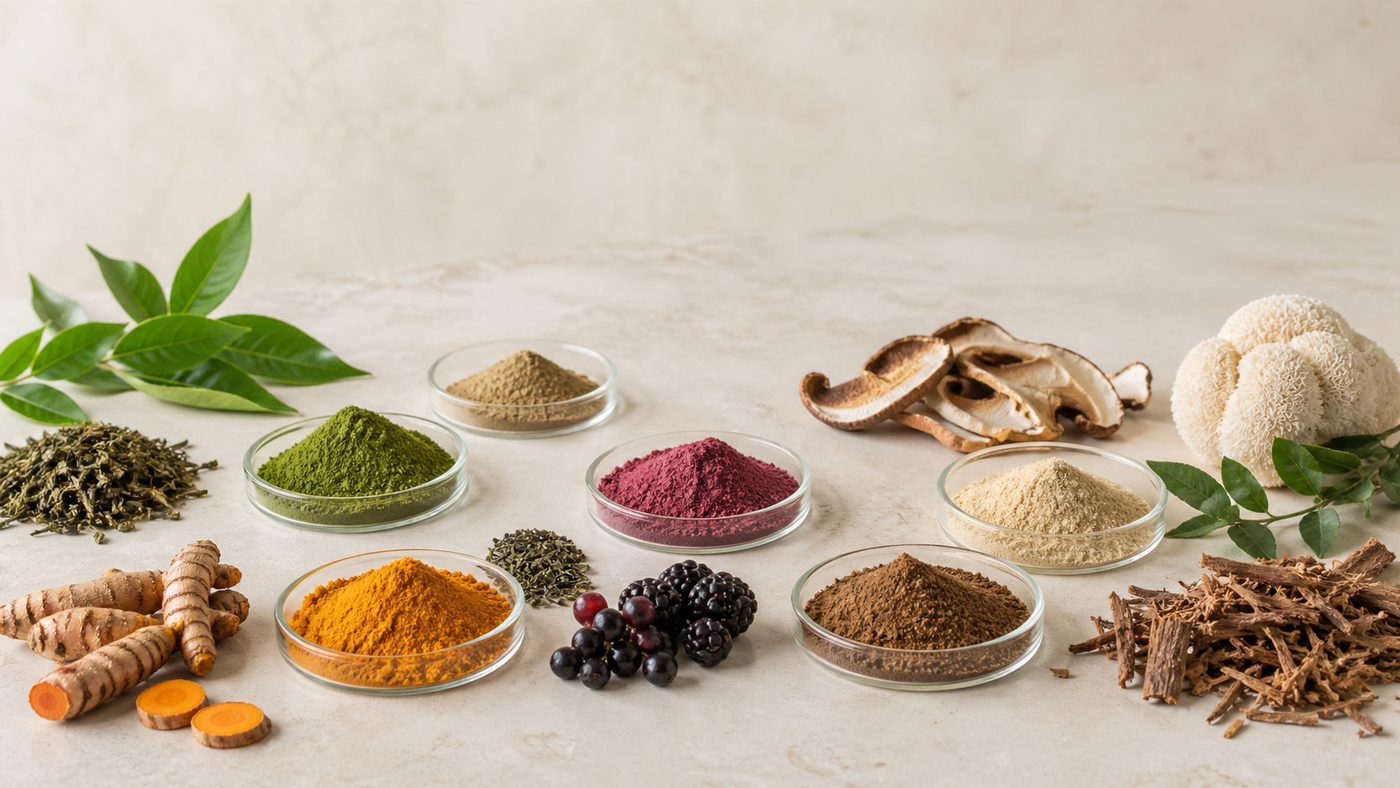
Grade Comparison Framework
| Item | What it tells the buyer | Why it matters |
|---|---|---|
| Raw powder | Milled source material | Botanical identity, plant part, physical and safety limits |
| Ratio extract | Input-to-output extraction relationship | Ratio definition, process basis and physical specification |
| Standardised extract | Defined marker target | Analyte, percentage, tolerance and analytical method |
| Final match | Technical plus commercial qualification | Same grade across quote, sample, specification and COA |
Evidence Boundary
This guide explains purchasing review principles. It does not certify a product or replace the specification and current offered-batch COA for the grade being purchased.
Start with Product Identity
Confirm the botanical or material identity, plant part and physical form. A raw powder, ratio extract and standardised extract should not be treated as equivalent purchasing specifications.
Match the Assay to Its Method
Record the analyte, target, unit and method together. HPLC, UV, TLC and GC answer different analytical questions; a numerical result without its method can be misleading.
Review Batch and Quality Data
Check batch number, manufacture date, appearance, particle size, loss on drying, ash, heavy metals and microbiological limits where applicable. Ask for the current offered-batch COA before final approval.
Compare Commercial Requirements
Confirm sample availability, MOQ, lead time, packing, destination market and required declarations. Qualification is complete only when the technical and commercial offer refer to the same grade.
Questions to Send the Supplier
- What exact botanical source and plant part are offered?
- What assay target and method apply?
- Is the COA representative or shipment-specific?
- Which physical and contaminant limits are controlled?
- Which documents are available for the destination market?
RELATED BUYER RESOURCES
Continue from comparison to qualification
Use the framework with real product grades, testing-method guidance and current quality evidence.
Standardized extracts →
Compare grades by marker and method
Tea extracts →
Review polyphenols, EGCG and theanine
Mushroom ingredients →
Define species, source and grade type
Fruit & vegetable powders →
Match sensory and process requirements
Testing methods →
Understand HPLC, UV and TLC evidence
Quality evidence →
Review certificates and operating context
Specification FAQ
Can two botanical extracts with the same assay percentage be equivalent?
Not automatically. Confirm botanical identity, plant part, analyte, unit, analytical method and other specification limits.
Which document should be used for batch approval?
Use the current offered-lot COA against the approved specification. A representative COA is useful for initial review but is not the final batch release document.
Why does the analytical method matter?
Results from HPLC, UV, TLC and other methods may describe different analytes or selectivity, so percentages should be compared only on an equivalent basis.